In modern defense environments, operational availability has become one of the most critical indicators of mission success. Weapon systems, communication platforms, electronic equipment, and command-and-control technologies must remain ready for deployment at all times — often under demanding operational conditions and extremely short response timelines.
In this reality, every delay, malfunction, or equipment failure can directly impact the operational capability of the organization.
Yet one of the most overlooked factors influencing operational readiness is the direct connection between logistics protection systems and operational availability itself.
In many cases, operational challenges do not begin on the battlefield. They begin much earlier — during storage, transportation, loading operations, deployment preparation, or transfers between facilities and countries.
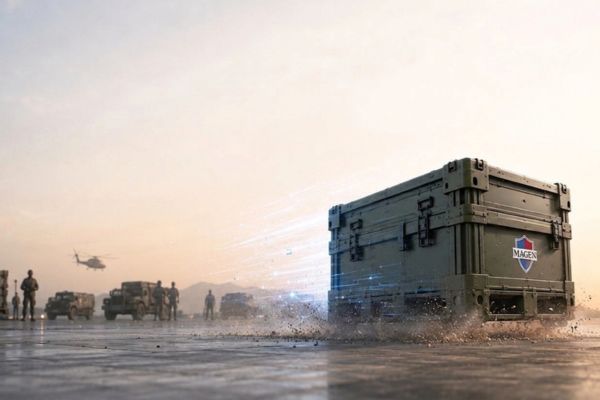
MAGEN, Teamnet’s operational protection platform, was developed for a world where defense systems must withstand increasingly complex transportation, storage, and deployment challenges. The systems combine precision engineering, environmental survivability, and mission-oriented operational adaptation for sensitive and advanced defense platforms.
This philosophy is built around a simple but highly significant understanding: systems that are better protected throughout the supply chain remain more operationally available when deployment becomes mission-critical.
Operational Availability Begins with Logistics
When discussing operational readiness, organizations typically focus on weapon systems, personnel, or field deployment capabilities.
In reality, a substantial portion of operational availability is determined much earlier — within the logistics stages preceding deployment itself.
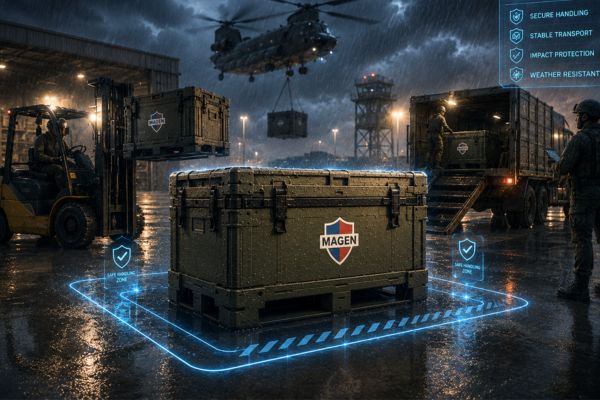
Sensitive systems often move through long operational journeys involving extended storage, international transportation, loading operations, unloading procedures, and transfers between military bases and operational facilities.
Throughout this process, systems are exposed to vibration, humidity, dust, mechanical stress, and constantly changing environmental conditions.
When protection systems are insufficiently engineered, the risk of operational failures increases significantly. In many cases, the damage accumulates gradually and becomes visible only at the exact moment the system is required for mission execution.
The result may include operational delays, unplanned maintenance procedures, or even full shutdown of expensive mission-critical systems.
This is precisely where MAGEN systems directly influence operational capability.
The protection platforms are engineered to minimize exposure to environmental threats while preserving system stability throughout the entire operational logistics lifecycle.
Fewer Failures – Greater Operational Continuity.
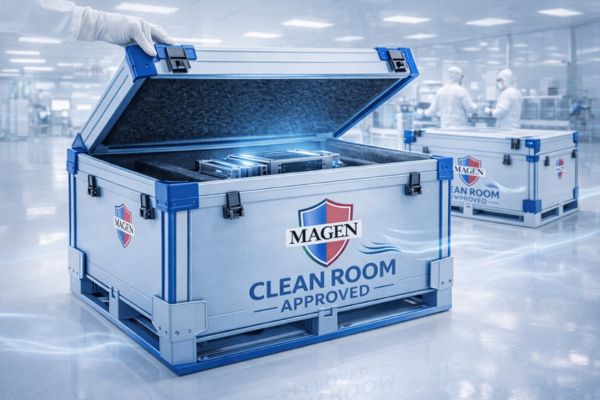
Modern defense systems contain highly sensitive electronic, optical, and mechanical components.
Even relatively small impacts can reduce system performance, require recalibration procedures, or disable entire operational platforms.
MAGEN systems were engineered specifically to reduce the likelihood of failures occurring during transportation, storage, and deployment operations.
The systems integrate IP55-rated resistance against water and dust ingress, UV durability, corrosion protection, and survivability under harsh operational environments.
In addition, the structural engineering behind MAGEN systems improves resistance against vibration, transportation loads, and deployment-related mechanical stress.
This combination creates a far more stable operational protection environment for sensitive equipment while reducing the need for unplanned maintenance following deployment.
In operational systems where every hour of downtime directly impacts mission capability, this represents a major operational advantage.
Protection Directly Influences Operational Tempo
Operational availability is not measured only by whether a system functions properly. It is also measured by how quickly the system can be deployed and activated when needed.
When equipment requires additional inspections, repairs, recalibration, or adjustments following transportation, operational response time suffers immediately.
MAGEN approaches operational protection as an integrated component of organizational tempo and deployment readiness.
The systems are engineered not only to protect equipment, but also to support faster transportation, simplified unloading operations, improved accessibility, and more efficient deployment workflows.
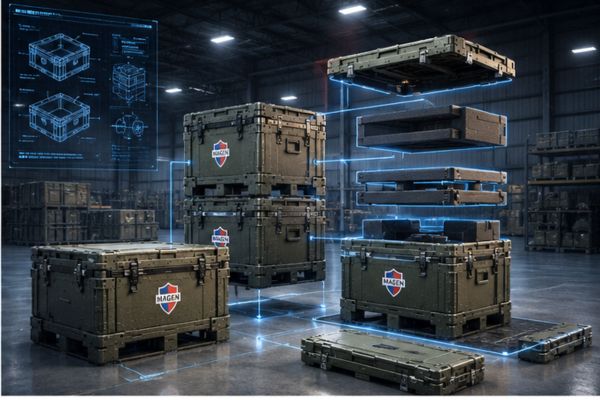
Modular architecture, relatively lightweight construction, and mission-specific adaptation enable MAGEN systems to become part of overall operational efficiency itself.
In practical terms, this means faster transitions from storage to deployment, reduced handling times, and greater flexibility when responding to rapidly changing operational conditions.
In today’s defense environments, where response speed has become a critical operational factor, logistics itself has become part of mission capability.
Teamnet Connects Protection with Operational Readiness
Teamnet’s engineering and development teams created MAGEN around a broader operational philosophy that connects engineering, logistics, manufacturing capability, and deployment readiness into one integrated protection platform.
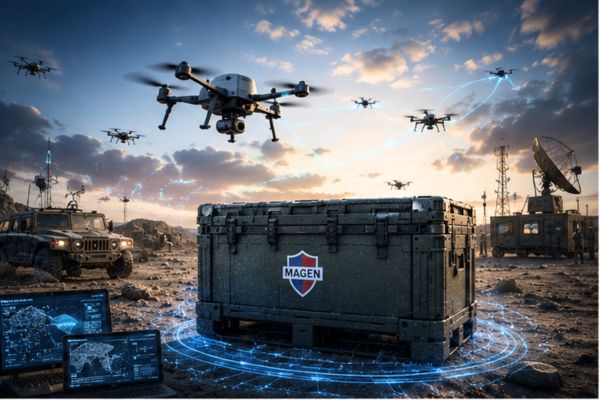
The systems are not designed merely as external protection structures, but as part of the complete operational ecosystem surrounding the defense system itself.
Every MAGEN platform is engineered according to mission profiles, field conditions, logistics environments, and operational deployment requirements specific to the customer.
The combination of advanced materials, environmental survivability, and precision engineering enables Teamnet to create solutions that preserve operational stability over long deployment cycles.
This approach helps organizations reduce operational risk, maintain logistics continuity, and keep mission-critical systems available for deployment even after highly complex transportation processes.
The Difference Between Basic Protection and Operational Protection
In modern defense environments, operational availability does not begin in the field itself. It begins much earlier — inside the operational supply chain.
Every equipment failure, every logistics delay, and every environmental exposure eventually impacts mission execution capability.
Through the integration of advanced engineering, high-performance materials, and environmental survivability, MAGEN delivers operational protection systems engineered to keep sensitive defense assets stable, protected, and deployment-ready throughout the entire operational journey.
Teamnet’s philosophy introduces a modern operational approach in which the protection system itself becomes an integral part of organizational mission readiness and operational capability.