One of the central topics raised by Maj. Gen. (res.) Yair Naveh, former Deputy Chief of Staff of the Israel Defense Forces, during the two professional conferences hosted by Teamnet at Tulip Winery and Castel Winery, was Israel’s need to strengthen its independence in the production and supply of defense equipment and munitions.
The security reality of recent years has transformed this issue from a long-term strategic consideration into an immediate operational requirement. It now directly affects the country’s ability to continue manufacturing, equipping its forces, and operating defense systems even when international supply chains are under pressure.
Discussions about ammunition sovereignty usually focus on production capacity, raw material availability, supply rates, and the ability to reduce dependence on suppliers outside Israel. However, increasing production is only one part of the system. As the volume of equipment and munitions being manufactured grows, so do the requirements for storage, protection, maintenance, and transportation.
The question, therefore, is not only how much can be produced, but also how to preserve what has already been produced over time and ensure that it remains operational and available until the moment it is needed.
Industrial Independence Requires Logistics Infrastructure
Domestic production capability provides a clear advantage during periods when international markets are uncertain, supply routes are disrupted, or restrictions are imposed on the export of equipment and raw materials. It enables shorter response times, greater flexibility in adapting production to changing requirements, and stronger control over supply processes.
At the same time, increased production capacity also creates new pressure on the logistics system. Every increase in output expands the amount of inventory that must be held and the number of movements required between factories, warehouses, military bases, and operational sites.
When sensitive systems or munitions are involved, physical storage space alone is not enough. A protective environment is also required to preserve the equipment under suitable conditions over extended periods.
This is why industrial independence should be considered in broader terms. It includes not only the ability to move a product off the production line, but also the ability to store it safely, transport it without damage, and maintain its availability throughout its entire logistics lifecycle.
From Production to Inventory
The transition from production to inventory is a particularly critical stage. Unlike products intended to move quickly to a customer or into immediate use, defense equipment may remain in storage for long periods, sometimes under less-than-ideal environmental conditions.
During this time, the equipment continues to be exposed to external influences even when it is not in use. Humidity, dust, temperature fluctuations, UV radiation, salinity, and outdoor conditions can affect metal parts, electronic components, optical systems, and other sensitive equipment.
When inventory must be deployed rapidly, any additional requirement for inspection, repair, or calibration creates a delay that may be operationally significant.
For this reason, simply having inventory is not enough. The key question is the condition of that inventory and the extent to which it can be relied upon to remain ready for use when required.
This becomes increasingly important as systems become more complex and expensive. The direct cost of damage may be high, but in many cases the more significant cost is the loss of availability and the time required to restore the system to operational readiness.
Storage and Transportation as Part of System Design
When systems are produced at scale and enter prolonged storage and transportation cycles, the way they will be preserved and moved must also be planned in advance.
Selecting a packaging solution late in the process, without taking the system’s characteristics into account, can create operational limitations, increased risk of damage, and additional costs throughout the product’s service life.
Proper planning should consider the system’s weight, structure, sensitive points, environmental conditions, and expected transportation methods. Storage duration, the number of transportation cycles, the frequency of opening and closing the protective enclosure, and the lifting and unloading methods used by different operators should also be taken into account.
This approach connects engineering and logistics at an early stage. Rather than treating packaging as an element added after development has been completed, it can be engineered as part of the overall system.
From Single-Use Packaging to Reusable Infrastructure
Expanding production capacity and maintaining large inventories also raises economic and operational questions. The use of single-use solutions requires repeated packaging production, storage of packaging materials, waste handling, and renewed preparation for every transportation cycle.
Reusable solutions make it possible to create a more stable system in which the same protective enclosure is used over an extended period and through multiple use cycles.
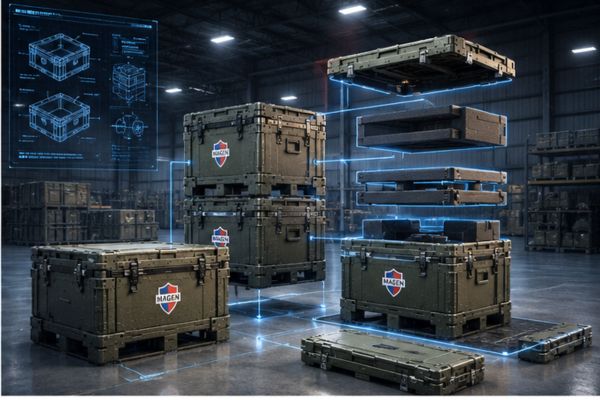
When the enclosure is designed specifically for a particular system and its logistics process, repeated adjustments can be reduced and greater standardization can be achieved across production sites, warehouses, and military bases.
This approach also has operational value. A permanent solution makes it possible to establish clear working procedures, shorten packing and unloading times, reduce improvisation, and maintain consistency in the way the system is handled throughout its journey.
MAGEN as Part of the Readiness Concept
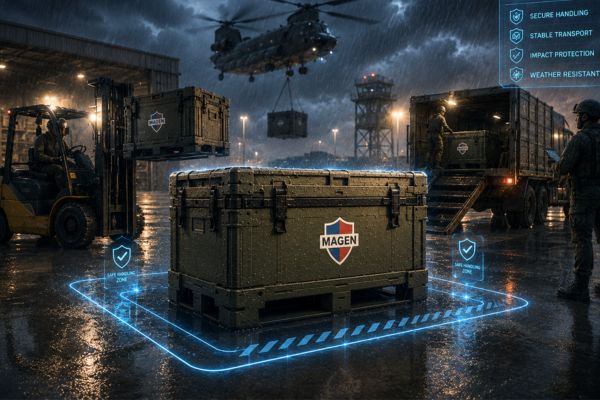
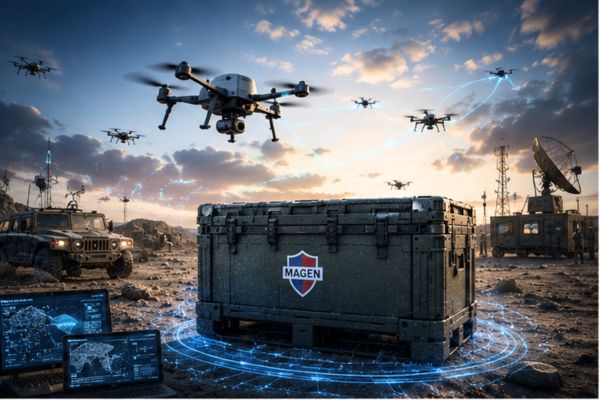
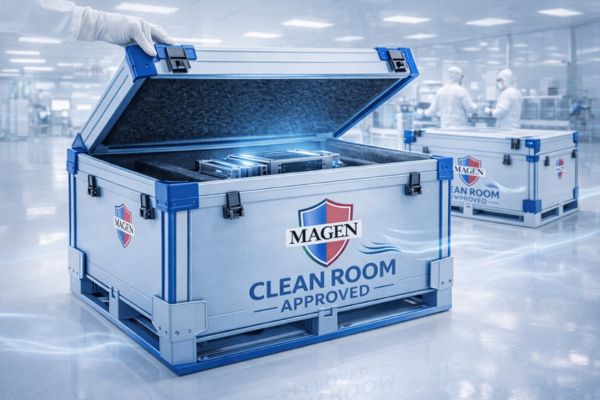
Teamnet’s MAGEN solutions were developed in response to this need. They are designed not only as transportation solutions, but as reusable protective systems that support the system throughout its logistics lifecycle.
The use of advanced polymers enables the development of structures that are resistant to corrosion, moisture, and changing environmental conditions, while maintaining relatively low weight and allowing for maintenance and repeated use.
The engineering design can be adapted to the required loads, the system’s structure, and the way it will be used, turning the protective enclosure itself into an engineered component within the logistics framework.
For some systems, the emphasis may be on sealing against water and dust. For others, structural durability, frequent transportation, or long-term storage may be more important.
The key lies in matching the characteristics of the equipment to its operating environment rather than selecting one standardized solution for every application.
Sovereignty Across the Entire Chain
The discussion surrounding ammunition sovereignty in Israel is expected to continue expanding as the local defense industry increases production and establishes new infrastructure.
Alongside investment in manufacturing facilities and production lines, there will also be a growing need to expand the ability to store, transport, and protect the equipment they produce.
Defense independence does not end with the ability to manufacture a product within the country’s borders. It also depends on the ability to preserve its operational condition, move it between locations, and deliver it to the user in a condition that enables immediate deployment.
Packaging, storage, and transportation are therefore not secondary stages that begin only after production is complete. They are part of the system that transforms manufacturing capacity into operational capability.
As the country strengthens its production capacity, it must simultaneously develop the infrastructure required to preserve those products throughout the entire chain. Only when these two elements work together — production on one side, and protection and logistics on the other — can ammunition sovereignty be achieved in its fullest sense.