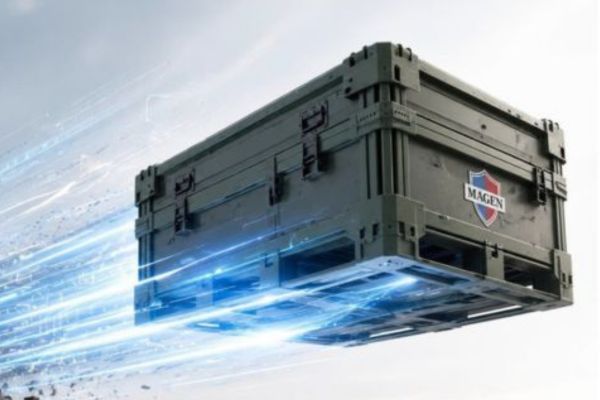
In modern defense environments, every operational detail directly influences mission capability. Transportation speed, deployment timelines, logistics loads, aircraft availability, and rapid response capability have all become integral parts of operational readiness.
In this reality, the weight of the protection system itself carries direct strategic importance.
As defense equipment moves rapidly between countries, military bases, aircraft, staging zones, and operational theaters, heavy and cumbersome protection systems create logistics limitations, operational delays, and unnecessary transportation costs.
The lighter the protection platform becomes — while still maintaining high survivability standards — the greater the organization’s ability to operate with speed, flexibility, and deployment efficiency.
Behind MAGEN stands Teamnet, an Israeli company specializing in the development and manufacturing of operational protection systems for defense and high-technology industries. Teamnet combines operational understanding, advanced engineering, environmental survivability, and logistics-driven thinking throughout the entire defense supply chain.
This philosophy led to the development of MAGEN systems with a strong emphasis on combining high structural durability with relatively lightweight configurations designed to improve operational efficiency across the entire deployment lifecycle.
Weight Influences the Entire Supply Chain
In the past, heavy-duty protection systems were often perceived as symbols of strength and durability. Today, operational thinking has evolved significantly.
Defense organizations now recognize that excessive weight creates major logistics burdens affecting every stage of the operational process.
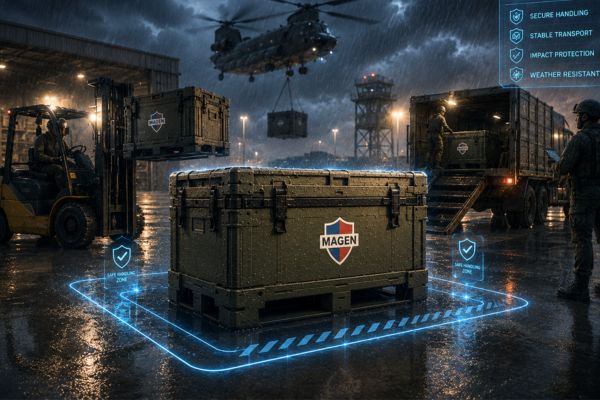
Heavier systems require additional transportation resources, limit payload capacity, complicate loading and unloading procedures, and reduce deployment flexibility in the field.
When air transportation becomes part of the logistics chain, the operational impact becomes even more significant.
At the same time, bulky and heavy systems slow operational workflows and extend response times. In modern defense environments, where operational readiness is measured by mobility and rapid deployment capability, every kilogram directly affects mission performance.
MAGEN approaches weight as an integral part of operational engineering itself.
This is why MAGEN systems are designed from the earliest development stages to combine operational efficiency with high-level protection performance.
Advanced Materials Change the Equation
One of the key factors enabling significant weight reduction without compromising survivability is the use of advanced engineering materials.
MAGEN systems are built using specialized polymers designed to create strong, durable, and structurally stable protection platforms while maintaining relatively lightweight configurations.
The combination of advanced materials and precision engineering enables the systems to withstand mechanical loads, vibration, and demanding operational environments while preserving long-term structural integrity.
In addition, MAGEN systems integrate IP55-rated resistance against water and dust ingress, UV durability, and corrosion protection — ensuring that lightweight performance never comes at the expense of operational survivability.
The result is an operational protection platform that combines deployment efficiency with comprehensive environmental protection.
Operational Efficiency Begins with Mobility
In modern defense logistics, mobility itself has become a strategic operational advantage.
The lighter and more deployable the system becomes, the faster organizations can transport, position, and activate mission-critical equipment across a broader range of operational scenarios.
MAGEN systems were engineered around the understanding that protection platforms themselves must support operational tempo rather than slow it down.
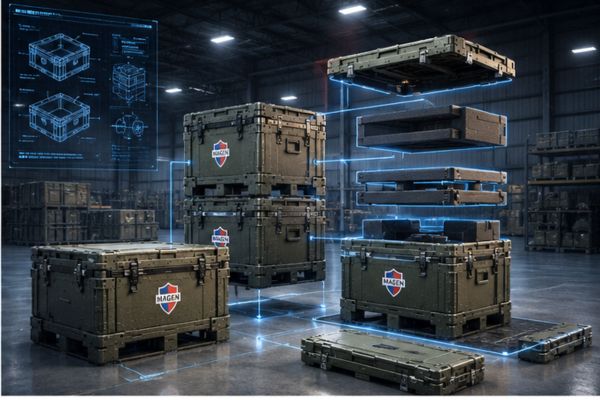
Modular architecture, intelligent structural engineering, and mission-specific adaptation transform MAGEN into an integrated part of operational logistics efficiency.
Teamnet’s solutions help organizations reduce transportation burdens, improve storage utilization, optimize payload management, and simplify field operations.
The relatively lightweight configuration also allows faster and safer loading and unloading procedures — a major advantage in environments requiring rapid deployment and high operational flexibility.
When organizations must move sensitive systems quickly and efficiently, this operational advantage becomes highly significant.
Teamnet Connects Protection with Operational Performance
The challenge in modern defense environments is not simply protecting equipment. The challenge is protecting it in ways that improve overall operational capability.
Teamnet developed MAGEN around a broad operational philosophy that combines physical protection, logistics efficiency, manufacturing expertise, and real-world deployment requirements into one integrated protection platform.
Each MAGEN system is engineered according to mission profiles, transportation methods, deployment conditions, and operational realities specific to the customer.
The combination of advanced engineering and lightweight high-performance materials enables Teamnet to deliver solutions that provide both high survivability and operational flexibility.
This philosophy allows organizations to improve response times, reduce operational burdens, and maintain sensitive systems in mission-ready condition over extended deployment cycles.
When Logistics Directly Impacts Operational Capability
In today’s defense world, weight is no longer merely a technical specification. It is a factor that directly influences operational speed, flexibility, mobility, and mission readiness.
Heavy protection systems create logistics limitations that reduce operational agility and increase deployment complexity.
Through the integration of advanced materials, precision engineering, and operational logistics thinking, MAGEN delivers protection systems that combine high structural strength with lightweight operational efficiency.
Teamnet’s approach introduces a modern operational philosophy in which the protection platform itself becomes an active contributor to mission performance, deployment readiness, and operational mobility.