Teamnet, one of Israel’s leading companies in the fields of industrial packaging, logistics, and engineered solutions for transporting sensitive and heavy equipment, has been serving clients across industries including manufacturing, defense, high-tech, pharmaceuticals, and advanced production for many years. This extensive experience repeatedly exposed the company’s teams to the recurring limitations of traditional packaging solutions made from wood, aluminum, and metal.
Drawing on a deep understanding of the market’s real operational needs, MAGEN was developed — an advanced Engineered PP solution designed to meet the demanding requirements of modern transportation and logistics.
The Limitations of Traditional Wooden Packaging
For decades, wooden packaging was considered the industry standard. It is familiar, widely available, and often relatively inexpensive in terms of initial purchase cost. However, when examining the total operational picture, significant limitations become apparent.
Wooden crates and packaging tend to absorb moisture, swell, wear out, and deteriorate over time. They are vulnerable to water exposure and harsh storage conditions, often requiring maintenance, repairs, or early replacement. For companies operating global supply chains, any such failure can result in delays, product damage, and additional costs.
Weight is another major drawback. Wooden packaging is typically medium to heavy in weight, increasing transportation costs, complicating internal handling within manufacturing facilities, and adding unnecessary operational burden. For procurement and operations managers, the conclusion is clear: a lower purchase price does not necessarily translate into a lower total cost of ownership.
Aluminum Packaging: Lightweight but Operationally Limited
Aluminum packaging is often perceived as a more advanced alternative. It is relatively lightweight, corrosion-resistant, and offers a modern appearance. However, aluminum solutions also present clear disadvantages.
Procurement costs are significantly higher compared to other alternatives. In addition, aluminum structures can be vulnerable to dents, deformation, and wear under intensive operational use. In many cases, when packaging is intended for repeated-use cycles or demanding field conditions, a higher level of long-term durability is required than aluminum can consistently provide.
Customization capabilities in aluminum packaging are also relatively limited. Sensitive equipment, medical devices, electronic systems, or defense components often require highly tailored engineering solutions that demand greater design flexibility.
Metal Packaging: Maximum Strength with Significant Operational Costs
Metal packaging solutions provide very high structural strength and are often selected for transporting extremely heavy equipment. However, this advantage comes with considerable operational costs.
Metal packaging is extremely heavy, difficult to handle, and frequently requires dedicated lifting equipment. Over time, it may also suffer from corrosion, particularly in humid environments or outdoor conditions, leading to ongoing maintenance requirements.
Beyond operational complexity, the total cost of metal solutions is high — not only in procurement, but also in transportation, handling, and long-term maintenance. In large-scale logistics operations, excess weight per unit quickly translates into substantial cumulative costs.
MAGEN: A New Approach Based on Engineered PP
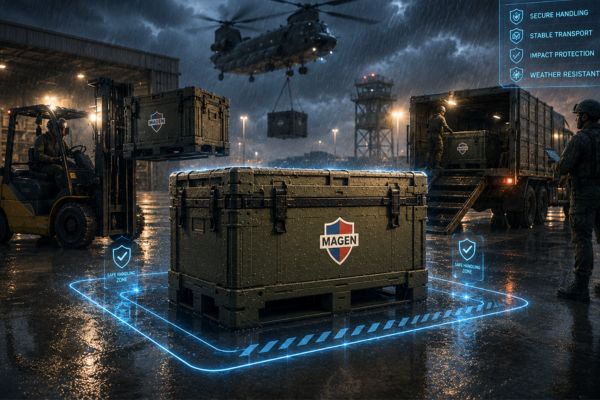
This operational reality led to the development of the MAGEN packaging series; an innovative solution based on Engineered PP. The advanced material creates a rare combination of extremely low weight and exceptionally high structural strength.
For procurement professionals, this means a dual advantage: lower transportation costs alongside superior product protection.
Unlike wood, MAGEN does not absorb moisture, swell, or deteriorate rapidly. Unlike metal, it does not rust and requires virtually no ongoing maintenance. Unlike aluminum, it offers greater resistance to impact, abrasion, and intensive operational use.
This combination creates a clear operational advantage for organizations seeking a long-term packaging solution.
High-Level Engineering Customization
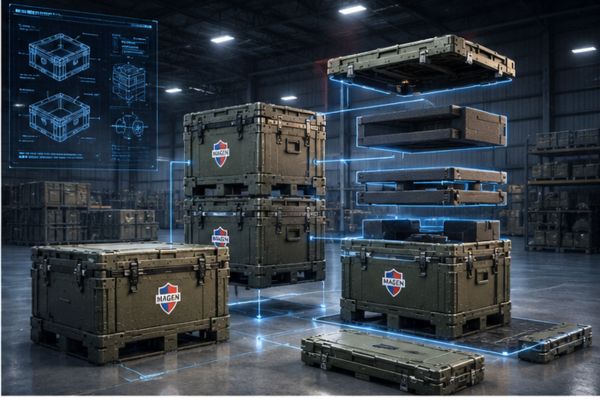
Another significant advantage is customization capability. MAGEN supports a high degree of engineering customization, including custom dimensions, internal fixation systems, protective foam inserts, lifting solutions, external branding, color options, and application-specific structures.
For engineers and operations teams, this means the packaging can be fully adapted to the product itself.
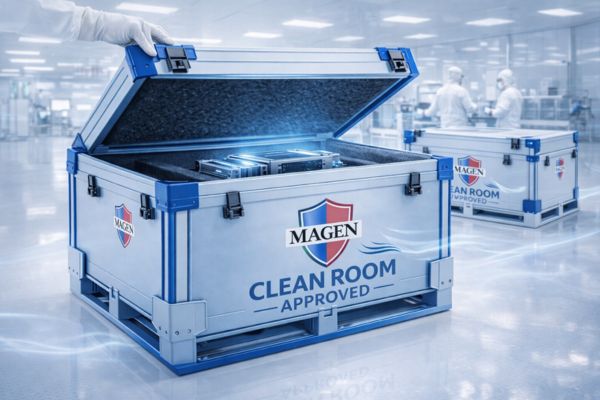
When transporting sensitive equipment, electronic systems, precision components, defense technologies, or high-value products, this level of engineering adaptation can make the difference between safe transportation and unnecessary operational risk.
Sustainability and Long-Term Operational Efficiency
MAGEN also provides a clear sustainability advantage. The solution is designed for repeated use and long service life, making it ideal for reusable logistics cycles and reverse logistics operations.
Instead of frequently replacing packaging units, organizations can reuse the same solution over extended periods, significantly reducing industrial waste and recurring procurement costs.
Beyond functionality, presentation also matters. High-quality, advanced packaging communicates professionalism, precision, and innovation. For global companies, defense manufacturers, advanced industrial organizations, and technology firms, packaging appearance carries genuine business value.
A Modern Packaging Philosophy
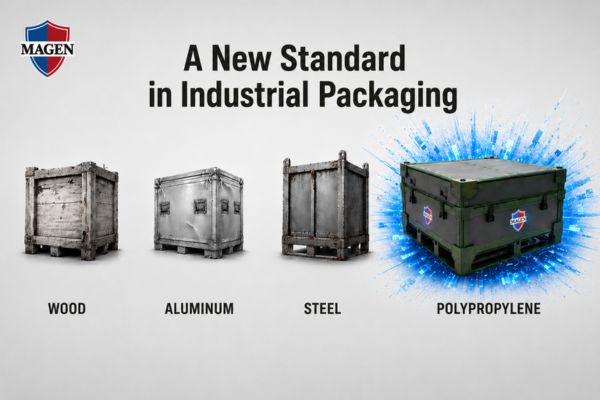
The choice between wood, aluminum, metal, and MAGEN is therefore not merely a choice between materials. It is a choice between a traditional approach to industrial packaging and a modern approach focused on efficiency, cost reduction, protection, and operational performance.
At Teamnet, we believe industrial packaging should provide long-term value, optimize supply chain operations, and protect products at the highest possible standard. MAGEN was developed from this perspective — an advanced solution born from real operational challenges and designed for the demands of modern industry.