The Challenge – Moisture and Dust Undermine Ammunition Stability and Sensitive Systems
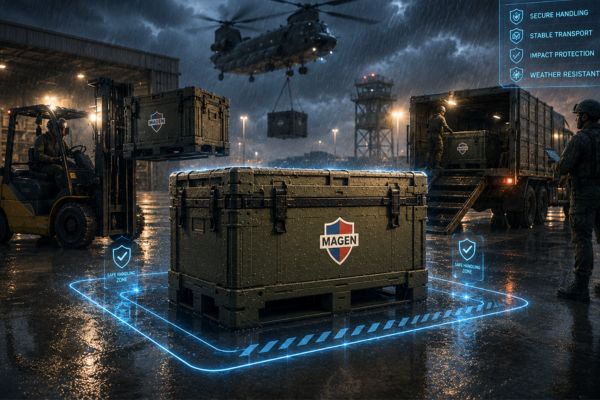
Wooden containers absorb and transmit moisture. Temperature and humidity swings cause expansion and contraction, micro-gapping, and infiltration paths for particulates. In aviation, pressure and temperature deltas generate light condensation on sensitive components; at sea, salty spray and high humidity accompany every movement; on land, dust and sand reach every junction. Storage and transport under these conditions increase calibration drift in optics and electronics, undermine ammunition stability, and force recurring cleaning, drying, and re-checks. In parallel, wood’s weight complicates hand-carry in narrow passages and lengthens preparation routes.
Operational Impact – Arming Rate, Fire Readiness, and Tactical Risk
On the battlefield, every minute of preparation delay translates into a readiness gap:
- Lower arming and loading rates reduce continuity of fire and synchronization between combat and support teams.
- Longer preparation windows extend exposure in chokepoints (ladders, corridors, loading points) and raise the risk of slips or physical mishaps under load.
- Calibration drift and moisture increase first-touch failure risk in optics/electronics and force live kit swaps.
- In air operations: higher probability of losing a slot or altering the load plan.
- At sea: slower load/unload cycles and queues on deck while maneuvering.
- On land: reduced deployment tempo in dusty corridors and greater reliance on remote maintenance support.
Bottom line: a smaller share of the force is mission-ready at any given moment, and tactical risk rises during the transition to the next task.
MAGEN’s Solution – Full Sealing, Lower Weight, and Environmental Resilience
MAGEN’s solution starts with sealing and extends to weight engineering and durability:
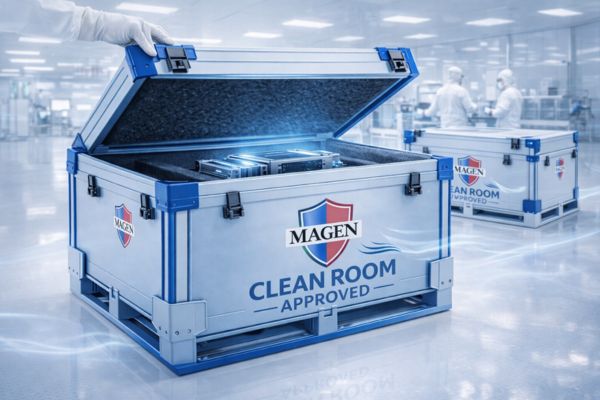
- Full water and dust sealing: a plastic shell with perimeter gaskets and tight closure geometries preserves a clean, dry interior; indicator window and desiccant options enable in-transit monitoring.
- Lower weight than wood: reduced tare weight improves hand-carry, shortens preparation routes, and lowers fatigue in narrow passages, ladders, and access hatches.
- Higher long-term resilience: engineered plastics are not moisture-sensitive like wood and maintain geometry and closure integrity across the life cycle, even under temperature swings.
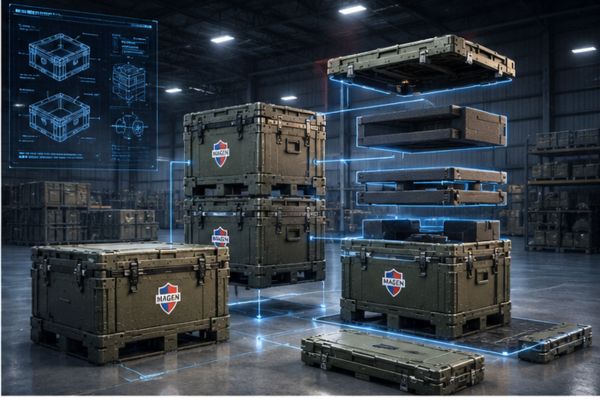
- Shock absorption and isolation: purpose-built inserts for shock, vibration, and thermal buffering tailored to payload profile—ammunition, optics, electronics.
- Drainage and pressure management: controlled drain channels and pressure-equalization valves for altitude/temperature transitions, especially in air transport.
- Fast, simple handling: intuitive open/close, quick cleaning (rinse/wipe), and rapid return to service—without long maintenance protocols.
Mission-domain fit:
-
- Air: pressure equalization prevents condensation; sealing preserves calibration.
- Sea: resistance to salinity reduces reconditioning and maintains appearance and performance.
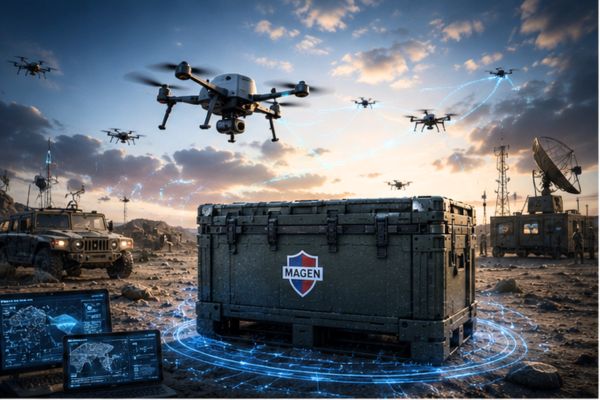
- Land: protection against dust and sand stabilizes function in long deployments.
Operational Metrics for In-Theater Monitoring
To measure direct combat value and improve mission tempo, define a compact operational metric set and compare before/after:
- “Store-to-weapon-station” time per unit, including handover points and narrow passages.
- Arming/loading rate per hour in constrained spaces (ladders/hatches/deck).
- Ready-to-Use on arrival: share of items immediately deployable without drying/cleaning.
- First-touch failures in optics/electronics after transport/storage.
- Exposure time at chokepoints (time spent in sensitive nodes under load).
- Average carry weight per operator/team and the reduction in accumulated effort along the route.
- Total preparation time to mission readiness (from store opening to fire/dispatch readiness).
- Cleaning/reconditioning routine: turnaround between mission cycles back to the line.
Tracking these metrics produces a reliable operational picture, focuses training, and standardizes procedures across units and domains.
Next Step – Readiness Starts with the Case
Full sealing reshapes the contours of readiness: fewer contaminants, fewer delays, greater fire availability and maneuver tempo. MAGEN’s sealed plastic cases add lower weight than wood and higher real-world resilience—in air, at sea, and on land. For a focused discussion of sealing configurations, inserts, drainage solutions, and an operational measurement plan that fits your mission profile, MAGEN’s technical service team is ready to help. Together we will define the right configuration, run a before/after comparison, and support you through to clear, in-field results.
For the Magen team press hire