Mission-Based Structural Design
The first stage in engineering a military protective case is understanding the mission and the equipment it must safeguard. Each item – whether a highly sensitive electronic system, a precision optical device, or a heavy mechanical component – requires a completely different solution.
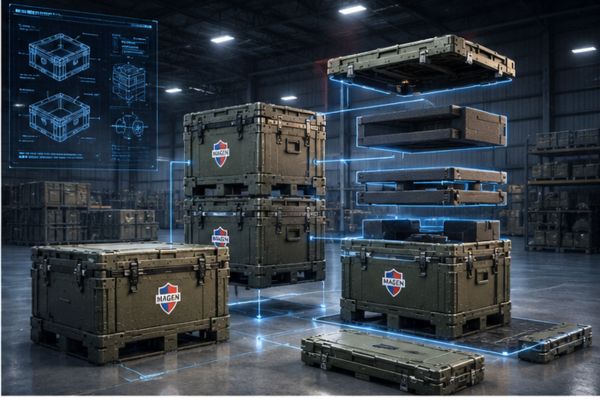
The case is designed to fit the exact dimensions and weight of the equipment and the anticipated modes of transport. Its structure integrates elements such as modular partitions for adaptable configurations, shock absorbers tailored to the item’s sensitivity, and sealing systems to protect against water, dust, and humidity. Proper design also enables reusability in future missions, with rapid adjustments possible in the field.
Resistance to Heat, Cold, and Mechanical Impact
Military protective cases must withstand extreme temperature changes – from scorching deserts to frozen terrains. Using composite materials and rigid plastics with UV protection additives ensures that the case will not warp, crack, or lose its properties over time.
From a mechanical standpoint, the cases are built to handle drops from height, continuous vibration during off-road transport, and point impacts from loading or rapid deployment. Every component – from the outer panels to the locking system – is designed to endure these stresses without compromising the safety of the contents.
Standardization and Compatibility with Existing Infrastructure
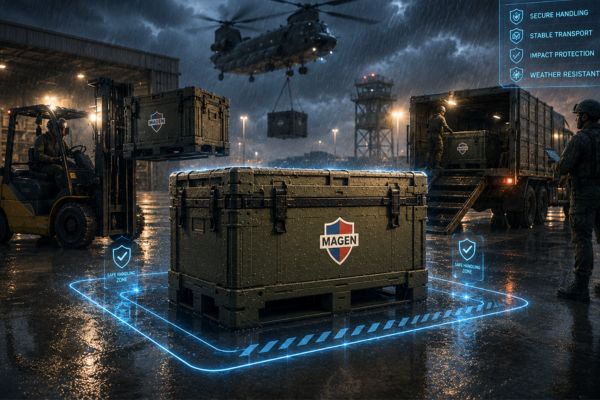
A major challenge is ensuring that cases integrate seamlessly with existing logistics systems. Case design takes into account the dimensions and tie-down points of military vehicles, transport aircraft, ships, and specialized containers.
Maintaining precise external dimensions and overall weight in line with protocols enables rapid loading, optimal use of transport space, and prevents situations where equipment cannot be accommodated by existing infrastructure. This compatibility also reduces transport costs and supports integration into multi-branch operations involving land, air, and naval forces.
Testing and Certification Before Deployment
Before a military protective case is deployed, it undergoes a rigorous testing process that simulates real-world operational conditions. These include vibration tests, drop tests, extreme temperature cycles, and resistance to wear and corrosion.
Testing is carried out by certified facilities, often in the presence of military client representatives, to verify that the product meets all operational requirements. This process is critical, as any case failure in the field can result in equipment damage or mission delays.
Conclusion
The engineering of military protective cases is a complex discipline that combines deep understanding of operational needs, advanced technological capabilities, and adherence to strict standards. Precise design, careful material selection, compatibility with existing logistics, and thorough testing all ensure that critical equipment arrives fully protected, ready for immediate use, and able to contribute directly to mission success.
Thanks to this engineering precision, the protective case becomes more than a logistical item – it becomes an integral part of operational capability, delivering a tangible advantage in the field.