Modern defense environments place unprecedented demands on military logistics systems. Sensitive electronics, advanced weapon systems, communication technologies, optical platforms, and precision-engineered components must move through highly complex supply chains while remaining fully operational and mission-ready at every stage.
In this reality, operational protection can no longer rely on a single basic solution. Effective protection must combine structural durability, environmental survivability, and precise engineering adaptation within one integrated system.
MAGEN is an operational protection platform developed by Teamnet, a leading Israeli company specializing in the development and manufacturing of advanced operational protection systems for defense and high-technology industries. Teamnet combines operational understanding, engineering expertise, product development, and advanced manufacturing capabilities to create mission-ready protection platforms engineered for modern defense environments.
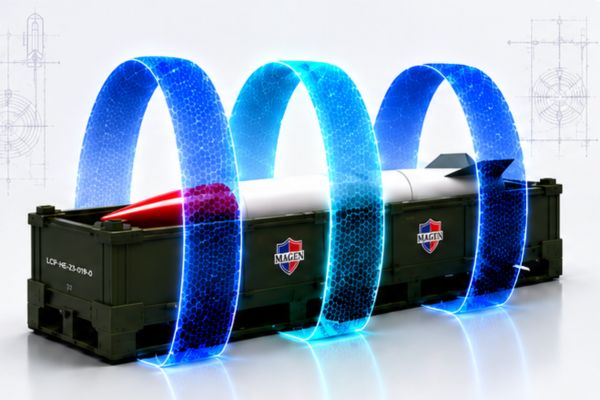
This philosophy led to the development of MAGEN’s Three Layers of Protection concept — a systems-based approach that integrates operational efficiency, environmental survivability, and advanced engineering into one unified operational protection platform for sensitive defense systems.
Operational Advantages Layer
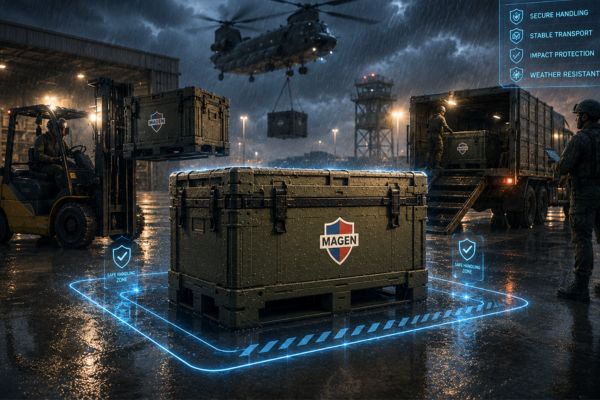
Modern military logistics environments operate at extremely high speed under constantly changing conditions. Equipment moves continuously between production facilities, military bases, ports, aircraft, storage centers, and deployment zones. Every operational delay or logistics limitation directly affects system availability and mission response capability.
This is why the first protection layer of MAGEN focuses on operational advantages.
MAGEN systems are engineered to combine high structural strength with relatively lightweight configurations, multi-dimensional adaptability, and operational flexibility across diverse logistics environments.
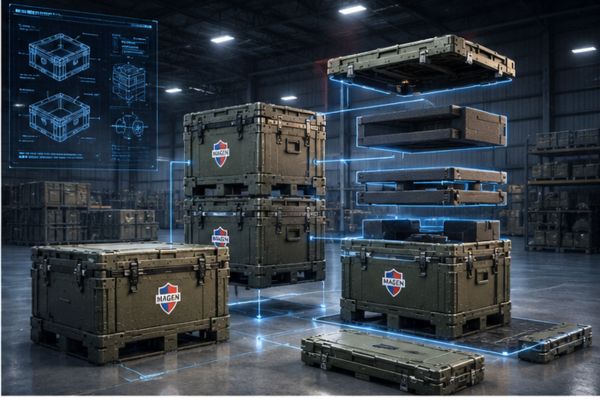
The use of advanced polymers reduces transportation and loading burdens while maintaining high structural integrity. In addition, the modular architecture allows precise adaptation for different systems and mission profiles — from highly sensitive electronics to heavy operational equipment.
Operational efficiency extends far beyond transportation itself. It also affects storage optimization, deployment speed, maintenance accessibility, and long-term equipment readiness.
The more efficient the logistics platform becomes, the greater the organization’s operational flexibility, responsiveness, and deployment capability.
Operational Survivability Layer
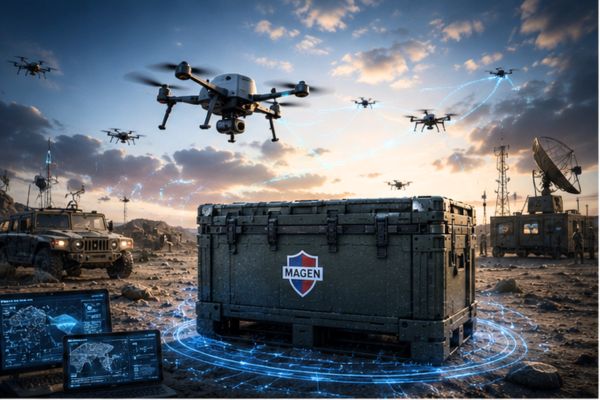
Operational environments are unpredictable by nature. Defense systems may be exposed to humidity, dust, extreme temperatures, heavy rain, UV radiation, hazardous materials, and long-term vibration throughout their operational lifecycle.
For mission-critical systems, even short exposure to these environmental threats can impact operational stability and readiness.
MAGEN’s second protection layer focuses on operational survivability.
The systems integrate IP55-rated protection against water and dust ingress, corrosion resistance, UV durability, and resistance against hazardous environmental conditions. Some configurations also include flame-retardant capabilities designed for complex operational environments and harsh field conditions.
The objective is not simply protecting equipment during transportation. The goal is preserving operational integrity throughout the complete logistics lifecycle of the system.
This broader survivability philosophy treats environmental resistance as a direct component of operational readiness.
In practical terms, this means fewer failures, reduced equipment damage, minimized downtime, and improved operational continuity under harsh deployment conditions.
Engineering Platform Layer
No defense system is identical. Every platform has different requirements involving weight distribution, structural dimensions, center of gravity, transportation methods, deployment procedures, and environmental operating conditions.
This is why real operational protection must begin with a deep engineering understanding of the system itself.
MAGEN’s third protection layer is built around an advanced engineering platform that enables complete mission-specific adaptation for every customer and operational requirement.
Teamnet’s engineering and development teams integrate modular architecture, internal reinforcement structures, mission-oriented system adaptation, and broad operational systems thinking from the earliest development stages.
Rather than forcing equipment into a predefined container, MAGEN systems are engineered around the operational and logistics realities of the customer.
This approach enables solutions that provide both superior physical protection and greater operational efficiency.
The integration between engineering and logistics planning creates long-term operational stability while supporting resistance against vibration, mechanical stress, and constantly changing deployment environments.
MAGEN’s engineering platform was designed not only to protect equipment, but also to support the operational ecosystem surrounding the system itself in a smarter, more flexible, and mission-oriented way.
Three Integrated Layers Working as One System
The core advantage of MAGEN lies in the integration of all three protection layers into one continuous operational platform.
Operational efficiency, environmental survivability, and advanced engineering do not function separately. They operate together throughout the entire lifecycle of the defense system.
This integrated approach enables organizations to address the challenges of modern defense logistics in a far more comprehensive way — not simply transporting equipment from one location to another, but maintaining systems fully operational, available, and deployment-ready at every stage.
As defense systems become increasingly expensive, sensitive, and operationally complex, protection systems themselves must become more intelligent and strategically engineered.
MAGEN’s Three Layers of Protection philosophy was developed from the understanding that operational protection directly influences mission capability itself.
Through the integration of advanced materials, mission-driven engineering, and environmental survivability, Teamnet develops operational protection platforms designed to ensure that sensitive defense systems remain protected, stable, and mission-ready throughout their entire operational journey.