The Limitations of Conventional Solutions
Standard protective cases available on the market are often mass-produced in set dimensions. These off-the-shelf solutions may work well for small to medium-sized products, but they fall short when dealing with large or unique industrial components—such as long systems, high-weight devices, or complex assemblies. In such cases, packaging that is too small or lacks structural adaptability can pose a risk of damage during transport or handling.
A Custom Engineering Approach
Our solution is based on the concept of building packaging around the product, rather than adjusting the product to the packaging. This means that for each customer, we develop a tailored design that takes into account the size, shape, weight distribution, and handling requirements of the item being transported.
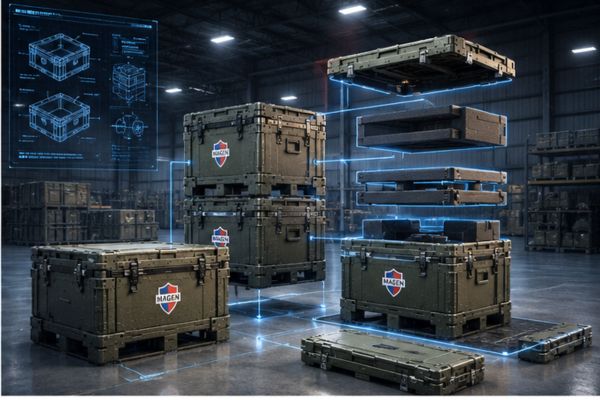
We use reinforced plastic structures combined with custom-designed inner cushioning—usually CNC-cut foams or modular support systems. These ensure both maximum protection and ease of access during use or servicing.
No Size Limits, No Compromises
One of the key advantages of our approach is the absence of any size or weight constraints. Whether it’s an ultra-long component, a heavy machine, or a high-sensitivity optical device, our team designs the exact structural solution needed, including reinforcements, handles, pressure equalization valves, and stacking features. The result: packaging that not only protects but also enhances operational efficiency.
Targeting Demanding Industries
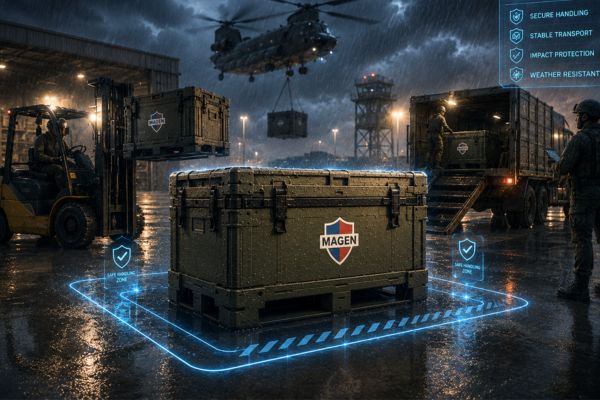
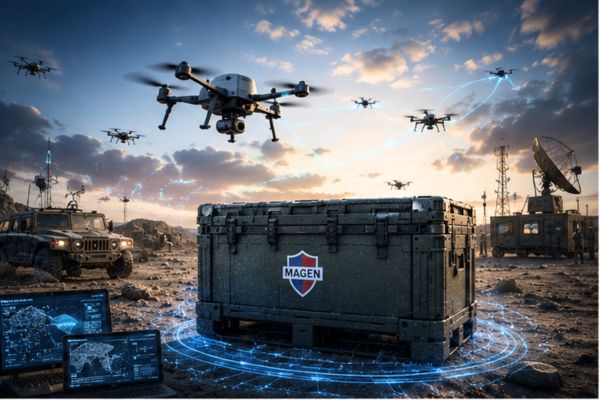
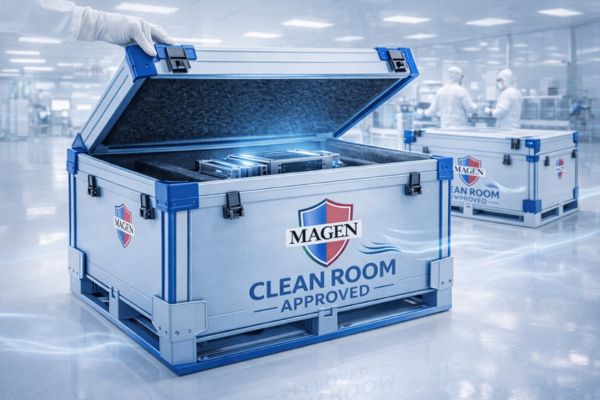
Our solutions are already being used in sectors where safety, precision, and durability are critical—such as defense, aerospace, electronics, and advanced manufacturing. In many of these fields, shipping conditions can be extreme, and packaging must perform reliably across international supply chains, airport handling systems, and multiple reuse cycles.
Designed for Integrators and Distributors
Our engineering team also supports integrators and distributors who are responsible for delivering high-end systems to their customers. Instead of forcing them to adapt to existing packaging standards, we provide the flexibility to include customer branding, technical labeling, and internal layouts tailored to installation procedures and field service.
Conclusion
Industrial-grade protective packaging must evolve with the needs of modern equipment. Our customizable solutions offer peace of mind, operational flexibility, and long-term cost savings—especially when compared to temporary or size-limited alternatives.
We invite companies looking for a reliable packaging partner to reach out and discover how custom-engineered solutions can transform their logistics and delivery processes.