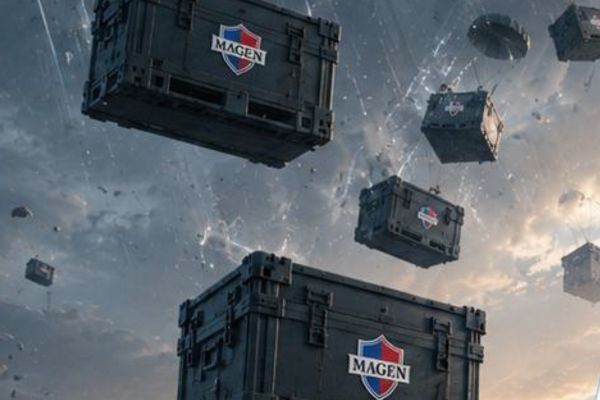
In modern defense environments, the quality of protection for sensitive systems begins long before assembly or final engineering integration. It begins with the selection of the raw materials themselves.
When defense equipment is expected to operate for years under harsh field conditions, move through global logistics networks, and remain mission-ready at all times, the materials forming the protection platform become a direct operational factor.
Modern defense and high-technology systems are constantly exposed to humidity, UV radiation, chemical substances, dust, vibration, mechanical stress, and demanding storage conditions. In this reality, traditional materials no longer provide the survivability and long-term stability required by modern operational environments.
MAGEN is an operational protection platform developed by Teamnet, an Israeli company specializing in the development and manufacturing of advanced operational protection systems for defense and high-technology industries. Teamnet combines operational understanding, engineering expertise, product development, and advanced manufacturing capabilities to create mission-ready protection systems engineered for real-world defense environments.
This is precisely why MAGEN systems are built using advanced polymers and specialized materials selected through long-term operational thinking focused on survivability, reliability, and mission performance.
Raw Materials Have Become a Strategic Component
In the past, protection materials were often selected primarily according to availability and cost considerations. Today, defense organizations understand that the material itself directly affects system lifespan, maintenance requirements, operational safety, and the ability to preserve mission-critical equipment in ready-for-deployment condition over time.
Materials that are not engineered for harsh operational environments may crack, deform, absorb moisture, or lose structural stability after prolonged exposure to sunlight and changing temperatures. In sensitive defense systems, even minor structural degradation can directly impact operational performance.
MAGEN’s protection philosophy is based on the use of advanced high-performance materials specifically engineered for demanding operational conditions.
The polymers integrated into MAGEN systems combine high structural strength, operational flexibility, and long-term environmental durability, even under harsh field conditions.
The result is not only improved equipment protection, but also greater operational stability throughout the entire defense supply chain.
Environmental Resistance Is Part of Operational Readiness
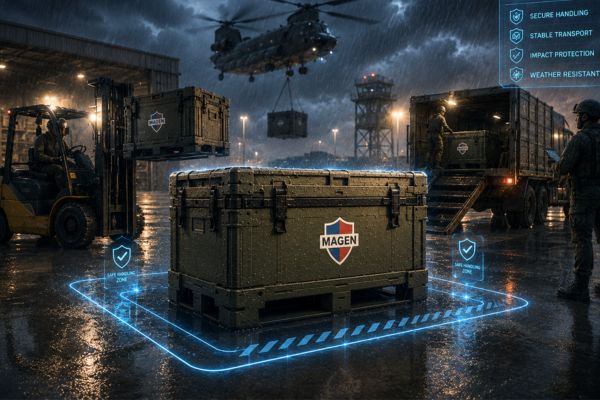
Defense systems do not operate inside controlled laboratory environments. They move across continents, remain in open staging areas, and are often exposed to extreme environmental conditions for prolonged periods of time.
For this reason, one of the key criteria in the material selection process behind MAGEN systems is long-term environmental survivability.
MAGEN systems integrate UV resistance, corrosion protection, resistance against hazardous substances, and high immunity to humidity and dust exposure. Some material configurations also include flame-retardant capabilities designed to meet demanding military and industrial operational requirements.
This level of environmental durability helps preserve structural stability and operational integrity even after years of transportation, deployment, storage, and field exposure.
In modern defense environments, where systems must remain available at all times, material engineering directly influences operational readiness.
High Structural Strength Without Excessive Weight
One of the greatest challenges in operational protection engineering is balancing structural strength with logistics efficiency.
Protection systems that are excessively heavy increase transportation burdens, complicate deployment operations, and raise operational costs throughout the logistics chain.
The advantage of the advanced polymers used in MAGEN systems lies in their ability to combine high structural performance with relatively lightweight configurations.
This combination enables Teamnet to develop highly durable operational protection systems without compromising deployment flexibility or logistics efficiency.
For defense organizations operating in environments where every kilogram affects transportation, rapid deployment, and operational response time, this represents a major operational advantage.
In addition, the structural engineering behind MAGEN systems improves resistance against vibration, mechanical stress, and continuously changing operational conditions over time.
The result is a protection platform that combines physical durability with operational mobility and deployment efficiency.
Teamnet Connects Materials Science with Operational Engineering
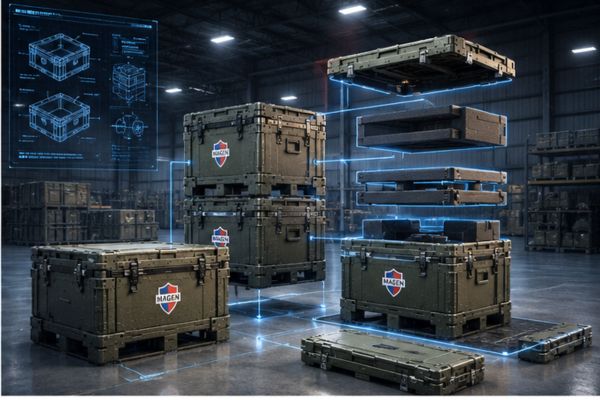
MAGEN was developed around a broader engineering philosophy that combines operational logistics, systems engineering, and materials science into one integrated protection approach.
Teamnet does not select materials solely according to technical specifications. Materials are chosen based on their ability to perform under real operational conditions and harsh defense environments.
Every MAGEN system is engineered according to mission profiles, environmental exposure, logistics requirements, and operational deployment realities.
The integration of advanced materials with modular engineering enables Teamnet to create protection systems capable of maintaining long-term operational performance under demanding conditions.
This approach helps reduce wear, minimize maintenance requirements, and significantly extend overall system lifecycle performance.
Rather than replacing protection solutions frequently, organizations benefit from stable, reliable operational protection platforms designed for long-term deployment readiness.
Engineering Protection for the Modern Defense Environment
In today’s defense world, raw materials are no longer considered a secondary technical detail. They have become a central part of operational survivability itself.
Environmental resistance, structural durability, lightweight mobility, and long-term stability are now fundamental operational requirements for advanced defense systems.
Through the integration of advanced polymers, precision engineering, and mission-oriented system development, MAGEN delivers operational protection solutions specifically engineered for the challenges of modern military supply chains.
Teamnet’s philosophy connects materials science, engineering expertise, manufacturing capability, and operational readiness into one integrated protection platform designed to keep sensitive defense systems protected, available, and mission-ready under all operational conditions.